









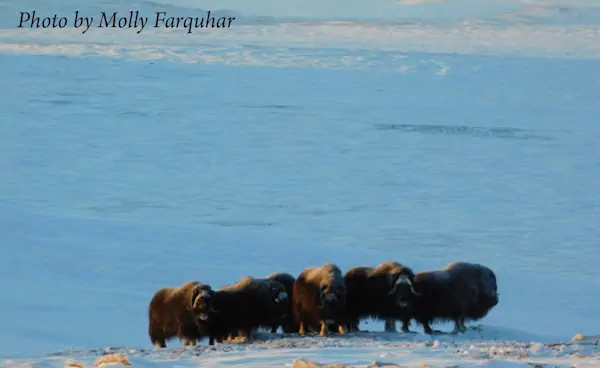
Above the arctic circle the midnight sun has risen, warming the inhospitable cold from the – 40’s to the – 20’s. With increased visibility comes an ability to explore farther afield and appreciate the unique challenges the wild neighbours here face. All of these creatures combat the cold and the unique challenges that come from living atop the beautifully textured permafrost (permanently frozen ground). There is one land mammal who has mastered the harsh terrain arguably more than any other, weighing up to 315 kg and looking very much like a walking carpet with impressive horns, is the mighty muskox. And yes, it is named for its smell.
When the blizzards blow, these bovidae beauties don’t back down and seek shelter as the other arctic inhabitants do. Their shaggy coats make them impervious to the cold. The undercoat, called qiviut, is extremely long, fine, and feels very fluffy and soft. It is the most expensive wool you can buy with the title of “cashmere of the north”. On top of this is the long course outer guard hairs which almost trail on the ground, sometimes called a skirt. This ice age look gives the muskox the ability to withstand temperatures below – 45 degrees celsius. They spend the winters in harems and will gather together in extreme cold for warmth, slowing their breathing, heart rate and their digestion instead of migrating. In the summer they will naturally shed their shaggy coats along the ground.
The next impressive thing about the muskox is their ability to find enough food to survive in the far north. Pawing with hooves at the active layer of soil that lies atop the permafrost, which may only be 20 cm thick they find arctic vegetation and lichen. They have been observed using their horns to smash the layers of ice that form over the ground during the freeze thaw cycle to find their next meal. I had the opportunity to examine the skull of a muskox as we dug it out from the snowdrifts of the tundra and I would not want to ever be on the receiving end of those horns that can be up to 10 cm thick.
The predators of the arctic, such as wolves, know this all too well. They will sometimes prey on muskox, usually going for the calves. However, if they are not quick the adults will form a circle around the young with their horns facing outwards or a solid line and then wait for the pack to leave. If the predators attempt to get too close they will defend themselves. They can have bursts of speed up to 40 km/hour and have been known to disembowel those fool enough to not give them their space. Wolves are wise to this behaviour and move on once the defensive posturing begins. Unfortunately for the muskox, after surviving thousands of years in this environment the introduction of the Europeans and their rifles wiped out their numbers to the brink of extinction when they took up this defensive posture.
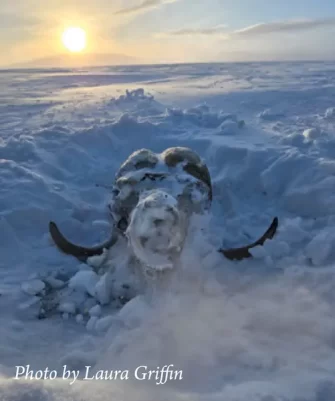
Since 1927 the Muskox have been put under protection in Canada. I eagerly await a day when I can encounter more than the bones and the wool left behind of the harem of nine that hang around Alert.












 Free Classifieds