






What Is a Democracy?
Several years ago I was doing a leadership seminar in Ottawa. During one of the sessions I made a comment that democracy was the superior form of government. After the session a gentleman from the Philippines approached me and asked if I would be willing to consider an alternate view on democracy. I said I was listening and he proceeded to expound the virtues of a benevolent dictatorship. His primary argument was that democracy presupposes that the group of people or nation has a common set of values that are agreed upon by all.
I am not interested in writing an article on the pros and cons of democracy. I am concerned about how we practice democracy. In Canada we have four main political parties that represent diverse ideological positions. I choose to support the party that most closely aligns to my set of life values. In a similar way, I support the candidate that aligns with that party’s “platform.” If the candidate of my choice gets elected, I expect them to walk out what their mouth has professed.
What happens after the election if they change their position and align with a different party? That is where our democratic process breaks down. We allow the personal preferences of the elected representative to be imposed upon those who elected them.
A political party does not define a politician, but it does impact a candidate’s decision making and is often a deciding factor for voters. Turning against the platform that got them elected shouldn’t be up to the politician’s discretion. Instead, politicians should have to win a special election to keep their seat after changing party affiliation. Doing so would better represent voters’ interests and keep them involved in the political process.
Party switching must be done with voters in mind, not on personal whims or to gain more power. Without viable means to reassess a politician’s new political affiliation, voters are left out of the conversation. With trust so scarce in contemporary politics, anything that can reassure confidence should be implemented. Inconsiderate politicians need to prioritize their constituents — and if they won’t, the rules must change to hold them accountable.
Allowing politicians to switch party affiliation based on their own personal preference is a slap in the face of democracy. We the people, cast our vote to put them in place based upon the values that were espoused during the election campaign. If those values change, we, by democratic vote, should have a voice in determining that candidate’s re-election. Without that vote, the candidate is saying that he has the right to impose his values upon the constituents. THAT IS NOT DEMOCRACY!
Allowing candidates to shift without a constituent vote, demoralizes voters and increases skepticism toward our electoral system. Voter skepticism is reflected in low voter turnout.
We define democracy as “government by the people for the people.” It would be cumbersome and impractical for every Canadian citizen to vote on every issue brought up in the house of commons. Hence, our democracy is expressed by electing representatives who will carry our voice into the House of Commons. If the candidate changes their “voice,” they no longer represent those who put them in place.
The recall process in our system is cumbersome and inefficient. There needs to be legislation that prohibits “crossing
the floor.” Any political representative who changes their political stripes mid-term needs to have the courage and the character to step down and let the people determine their future.
We need politicians who have courage, integrity and character. Courage will enable them to stand on the ground of truth without being shaped by popular opinion. Integrity asks the question, “Is it right?” not, “Does it work?” Character is a moral compass that is consistent regardless of my environment.
It is my hope that our leaders will manifest a clear sense of morality in their governance that is shaped by transcendent values, integrity that is consistent in any context, and courage that can live with the consequences of truth.
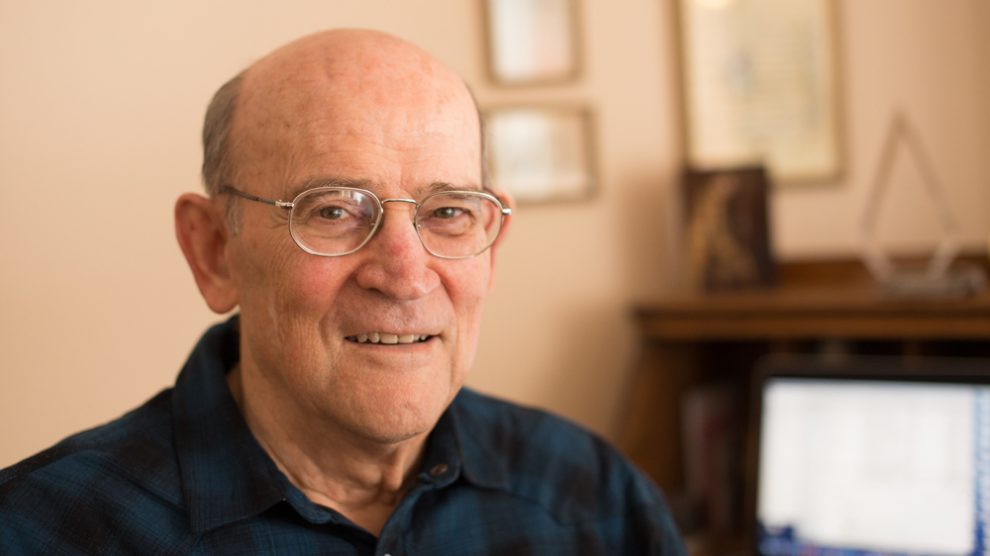
Duane Harder








 Free Classifieds