









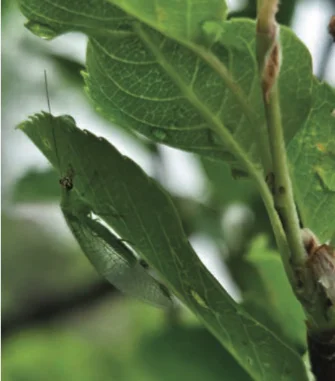
August is known for its summer weddings. Now when I hear wedding bells and see brides dressed in lace I cannot help but think of the laced beauties of the insect world, the green lacewings. These gorgeous fluorescent green insects combine the delicate beauty of their well veined wings that resemble a lace veil over their backs with a touch of gold in their enormous compound eyes. The latin name for the family Chrysopidae derives from the Greek words for golden eye. Whomever named this insect certainly deserves a toast. But should these insects be welcomed guests at our nuptial celebrations? I say yes.
First the adult lacewing is one of the few insects that the average person oos and ahhs over. If you watch them very carefully you will see that there is a certain fairy- like grace to their flight, which includes an acrobatic front flip upon take off. The adults also eat mostly nectar and pollen, which would aid in pollinating all those flowers you need for weddings. They could also be welcome on the dance floor as the adults are known for vibrating their abdomens at one another to attract a mate. But my experience with weddings has shown me that the real fun is to find out what the children are up to, and lacewings do not disappoint in this department.
The family of green lacewings undergo full metamorphosis, meaning they have four life stages. Unlike most insects, green lacewing eggs are easily identifiable as they hang from silk stalks produced by the mother which protects them from any predators that might happen upon them, this includes their first born siblings. The appetite of the new born lacewing larvae, also known as aphid lions is something to be celebrated by both gardeners and horror writers. They resemble ladybug larvae with six visible legs on a chunky flat body, but they have a very visible mandible that is essentially giant hollowed out pincers. With these pincers they grab ahold of their prey, mostly aphids, and secrete digestive enzymes into their body. Then the larva can suck out the aphids insides like an insect smoothie. If that is not terrifying enough some species will then adorn themselves with the hollow bodies of their victims and other debris like lichen to disguise themselves and gain better access to more aphids. This also helps them to evade detection from the ants who like to protect the aphids like shepherds do their sheep. Green lacewing larvae have been known to eat between 100 and 600 aphids each making them well suited as biocontrols in our gardens.
After the killing spree is done they transform into circular silk balls in the pupa stage of their lives waiting to be transformed from the beast into the beauty of adulthood and their lacewings. A tale as old as time. So if like me you find yourself a guest at a wedding this August, I hope in the outdoor moments you have a chance encounter with a green lacewing that leaves you admiring their natural beauty. Just don’t try to pick one up as it will excrete a coffee smelling odour to defend itself.














 Free Classifieds