









Q&A Aging Exerciser – 2
In my previous article, we explored the importance of strength training, cardiovascular exercise, and staying active as we age. My colleague, Dr. Rosanne, continues to answer some important questions about exercise and healthy aging, including how to improve heart health, whether walking is enough, how exercise supports independence as we get older, and whether we should be lifting heavy or light weights.
How can I improve my heart health as I age?
Move more and sit less. Regular physical activity remains one of the most powerful tools for protecting heart health. Aim for a combination of strength training, cardiovascular exercise, and daily movement.
Other important factors include getting adequate sleep, managing stress, maintaining muscle mass, eating enough protein, and controlling blood pressure and blood sugar levels.
Heart health isn’t determined by one workout. It’s the result of consistent habits practiced over many years.
Is walking enough exercise?
Walking is one of the best activities we can do for overall health. It’s accessible, low impact, improves cardiovascular health, supports mental well-being, improves joint health, and helps people stay active throughout life.
However, walking alone is not enough to preserve muscle, maintain bone density, or optimize physical function as we age. Think of walking as a foundation. It’s excellent, but it works best when combined with strength training and some balance- focused activities.
The Importance of Exercise in Our 80s and Beyond
One of my favourite concepts is the distinction between the “young old”, ages 65-75, and the “old old”, ages 85+.
Chronological age tells us how many birthdays we’ve celebrated, but it tells us very little about function. I’ve met 60-year-olds who struggle to get off the floor and 85-year-olds who travel, hike, carry groceries, and live independently.
The difference is often not age – it’s function.
As we move into our 70s, 80s, and beyond, exercise becomes less about aesthetics and more about preserving independence. Strength allows us to climb stairs, get up from a chair, carry groceries, recover from illness, prevent falls, and continue doing the activities we love.
The goal isn’t simply to live longer. It’s to maintain the strength, mobility, confidence, and resilience to fully enjoy those extra years. Exercise remains one of the most powerful tools we have to influence how we age.
Heavy versus Light Training: What adaptation are we trying to achieve?
One of the biggest misconceptions in fitness is that there is only one “right” way to strength train. The reality is that different training approaches produce different benefits, and a well-rounded exercise program often includes a variety of training styles.
Programs that use lighter weights with higher repetitions, particularly when performed continuously through compound movements, can be extremely effective for improving muscular endurance, cardiovascular fitness, movement efficiency, calorie expenditure, and overall work capacity. These workouts challenge the body’s ability to sustain effort over time, which can translate well into everyday activities such as climbing stairs, carrying groceries, gardening, traveling, and keeping up with an active lifestyle.
For older adults, this style of training can also be appealing because it allows participants to accumulate significant training volume with lower joint stress and often feels more approachable for individuals who may be intimidated by traditional strength training. Many participants report improvements in energy, stamina, confidence, and their ability to perform daily activities without fatigue.
That said, muscular endurance and muscular strength are not the same thing. While lighter loads can help maintain and improve muscular endurance, research consistently shows that heavier resistance is generally more effective for maximizing strength, preserving muscle mass, and improving bone density—three factors that become increasingly important as we age.
Rather than viewing these approaches as competing philosophies, I view them as complementary tools. Muscular endurance helps us do activities longer. Strength helps us do them more easily. Cardiovascular fitness helps us recover and sustain activity. Together, they create a foundation for healthy aging.
My goal with clients is not simply to help them exercise today, but to ensure they can continue doing the things they love ten, twenty, or even thirty years from now. For most people, the best program includes some combination of strength training, cardiovascular conditioning, balance work, mobility training, and muscular endurance exercise.
The most effective exercise program is ultimately the one that is safe, enjoyable, sustainable, and aligned with an individual’s goals. Whether someone is lifting heavy weights, participating in an endurance-based group fitness class, or doing a combination of both, the most important thing is that they are challenging their body regularly and consistently.
To learn more about strength training, healthy aging, and midlife wellness, visit DrRosanneWoods.com/stronger-with-age
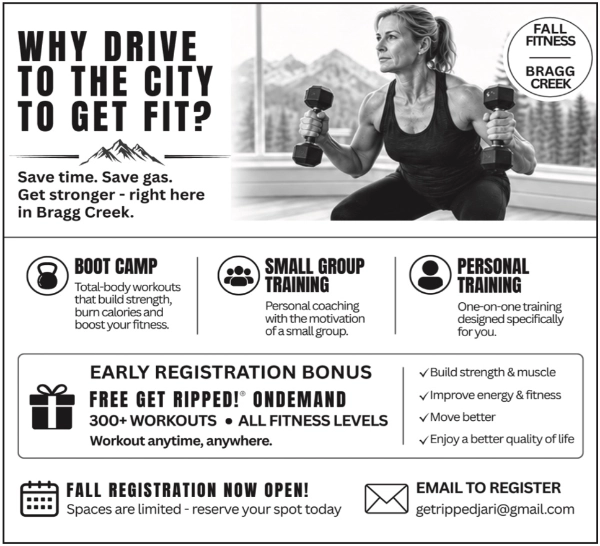
Jari Love is a certified trainer and creator of the successful scientifically tested Get RIPPED!® series. You can learn more about Jari Love at www.jarilove.com. You can follow her on Facebook at @JariLoveFitness and at @rippedjari on Instagram.






 Free Classifieds