









Q&A Aging Exerciser
One of the things I value most is surrounding myself with people who have different areas of expertise. No matter how many years we’ve been in this profession, there’s always something new to learn.
I recently had the opportunity to attend a workshop presented by my colleague, Dr. Rosanne, on the aging exerciser. It was incredibly informative, evidence-based, and full of practical strategies that I know will benefit all of us.
Why am I losing muscle even though I’m active?
Many people assume that if they’re active, they’re protected from muscle loss. Unfortunately, that’s not always the case. As we age, we naturally lose muscle mass and strength through a process called sarcopenia. Activities like walking, gardening, golfing, or yoga are wonderful for health, but they don’t provide enough resistance to tell the body to maintain or build muscle.
The good news is that muscle loss is not inevitable. The body responds remarkably well to strength training at any age. I’ve worked with women and men in their 60s, 70s, and 80s, who have become significantly stronger. Staying active is important, but preserving muscle requires challenging your muscles regularly with resistance.
How often should I lift weights as I get older?
Most adults over 50 should aim for at least two full-body strength training sessions per week. The key is consistency rather than spending hours in the gym.
Strength training doesn’t have to mean heavy barbells. Resistance bands, dumbbells, weight machines, and even bodyweight exercises can all be effective. What matters most is progressively challenging your muscles over time.
Can I build muscle after menopause?
Absolutely. One of the biggest myths I hear is that women can’t build muscle after menopause.
While hormonal changes can make the process slower than it was in our 20s or 30s, the body never loses its ability to adapt. Research consistently shows that postmenopausal women can gain muscle, improve strength, increase bone density, and enhance metabolic health through proper resistance training.
In fact, strength training may be one of the most powerful tools women have to counter many of the physical changes associated with menopause.
What is the best type of strength training for bone health?
Bones respond best to load and impact. Exercises such as squats, lunges, step-ups, deadlifts, and overhead presses create forces that stimulate bones to become stronger. Weight-bearing impact activities such as jumping, hopping, or skipping can also be extremely beneficial when appropriate for the individual.
One important point is that bones don’t respond to light weights forever. To maintain or improve bone density, we need to progressively increase the challenge. The goal isn’t simply movement—it’s providing enough stimulus for the body to adapt.
Do I really need cardio if I’m lifting weights?
Yes. Strength training and cardiovascular exercise each provide unique benefits.
Strength training helps maintain muscle, bone density, balance, metabolic health, and functional independence. Cardiovascular activities support heart health, circulation, endurance, and overall longevity.
I often tell clients that strength training helps you age stronger, while cardiovascular training helps you age longer. The healthiest approach includes both.
What’s the best type of cardio for fat loss after menopause?
The best cardio is the kind you’ll do consistently. That said, many women benefit from incorporating some higher- intensity intervals alongside lower-intensity activities such as walking, cycling, or swimming. Interval training can improve cardiovascular fitness, insulin sensitivity, and metabolic health in less time than traditional steady-state cardio and provide the additional benefits of improved glucose control.
However, fat loss after menopause is rarely solved by doing more cardio. Building and maintaining muscle through strength training often has a bigger impact on long-term body composition and metabolic health as it promotes positive changes in our ability to process glucose more efficiently.
How much cardio is too much?
More is not always better. When cardio starts interfering with recovery, strength gains, energy levels, sleep, or overall well- being, it may be excessive. I often see active women spending hours doing cardio while neglecting strength training. The result can be fatigue, muscle loss, and frustration.
A balanced program that includes strength training, cardiovascular exercise, recovery, and adequate nutrition will usually produce better results than simply adding more cardio.
As we age, the goal isn’t just to stay active—it’s to stay strong, capable, and independent. By combining strength training, cardio, proper recovery, and good nutrition, we can support our health and quality of life for years to come. In my next article, we’ll explore why exercise becomes even more important as we age and how it helps us maintain the lifestyle we enjoy.
To learn more about strength training, healthy aging, and midlife wellness, visit DrRosanneWoods.com/stronger-with-age
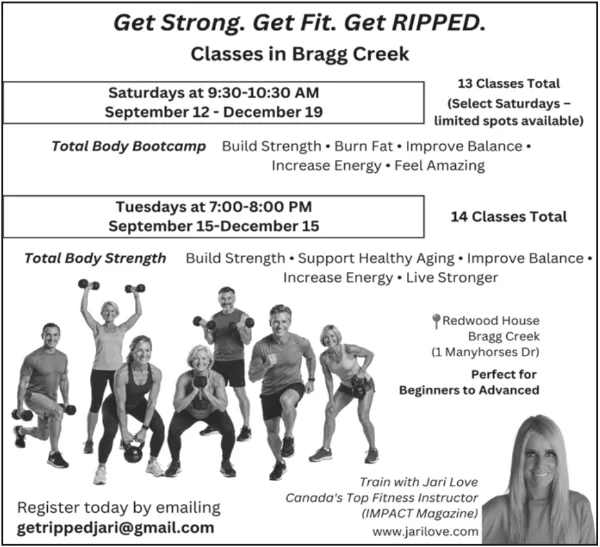
Jari Love is a certified trainer and creator of the successful scientifically tested Get RIPPED!® series. You can learn more about Jari Love at www.jarilove.com. You can follow her on Facebook at @JariLoveFitness and at @rippedjari on Instagram.








 Free Classifieds