









Living in Grizzly Country: Why Coexistence Matters
The eastern slopes and foothills regions of the Canadian Rockies are key habitats for grizzly bears. These large mammals are not only powerful symbols of wilderness, but essential participants in the health of the surrounding ecosystem. As human- populated forest communities continue to develop and attract more people to explore the nearby woods, the question is not whether grizzlies belong here (because they do), but how can we ensure we are sharing this landscape safely and sustainably without further fragmenting their range?
A Keystone Species
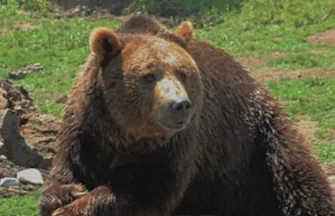
Grizzlies are what ecologists call a keystone species: their presence makes the environment stronger, more diverse, and more resilient. One of the most fascinating ways they support the ecosystem is through their feeding and movement patterns. When grizzlies forage for berries, roots, and other vegetation, they spread seeds across huge distances through their scat, helping forests regenerate. In search of insects, their digging aerates the soil and creates small pockets where plants, insects, and small mammals can thrive. As predators and scavengers, they also play a role in population balance by ensuring no single prey species dominates and by reducing disease by consuming animal carcasses.
Effects of Population Decline
When grizzlies disappear from an ecosystem, the effects ripple outward in ways that may not be immediately apparent. Seed distribution declines, which can lead to fewer berry-producing shrubs, affecting birds, ungulates, and even insects. Elk and deer populations may grow unchecked, causing overgrazing in sensitive areas. Over time, this can result in erosion, reduced forest regeneration, and the loss of biodiversity. In simple terms, when grizzlies vanish, ecosystems become less healthy, less balanced, and less able to adapt to change.
Human Threats
Despite their ecological importance, grizzly populations face multiple threats – many of them human-driven. Roads, railways, and trails fragment habitat, making it harder for bears to move safely between feeding areas. Traffic collisions kill more bears every year in the Rocky Mountains than predation or starvation. Human attractants such as garbage, pet food, fruit trees, improperly stored camping supplies and cutblocks can draw bears closer to areas where humans live and recreate, significantly increasing the risk of conflict. And in almost all conflicts, the bear pays the ultimate price. Human behaviour, such as hiking or jogging quietly on a forested trail, camping, hunting, or allowing dogs to run off-leash, can potentially put both people and bears at risk in this terrain. Grizzlies do not seek out confrontation, but like all wildlife, they will defend themselves, their cubs, and their food sources if surprised or threatened.
Living Together
Coexistence requires a shift from seeing safety as passive to treating it as shared responsibility. We can start by keeping attractants secure: locking up garbage, cleaning backyard fruit and vegetable plots and barbecues, feeding pets indoors, and following attractant bylaws. On the way to the trail, we can choose to travel together in vehicles and reduce the likelihood of collisions. While out on the trail, we can choose to travel in groups, make noise, carry bear spray, and keep dogs leashed – simple steps that dramatically reduce the chance of a dangerous encounter in high-conflict zones. Respecting trail closures is equally vital; they exist not to inconvenience hikers but to protect bears by allowing them space to feed, mate, or raise cubs.
Education and Compassion
Grizzly bears are not intruders to the forest environment around us. They have been local inhabitants for thousands of years. Although there have been recent reports of grizzly attacks on humans, we do need to be mindful about their presence around us while considering to respect a landscape that remains wild, balanced, and ecologically rich.
Coexistence is possible
In fact, it is already happening. In pursuing a PhD in examining how grizzlies and humans share trails in the Banff, Kananaskis and nearby park regions, biologist and MLA Sarah Elmeligi reported that she has received numerous reports by area hikers of pleasant, non- confrontational bear encounters. So let’s remain thoughtful, aware, and committed. When we protect grizzlies, we protect an ecosystem that sustains us all.
This article was thoughtfully developed by a local resident who volunteers with Bragg Creek Wild. If you would like to contribute an article or volunteer some time in areas that interest you, visit us at www.braggcreekwild.ca and become a member. It’s free!












 Free Classifieds