









Surviving the Freeze: How Sparrows and Chickadees Brave Alberta Winters – and How You Can Help
There is nothing sweeter than listening to the call of a chickadee on a sunny winter day and watching them hop around in glee. But how do they survive a harsh winter cold snap?
While we can bundle up and crank up the heat on a -30C day, small backyard birds like sparrows and chickadees face a far tougher challenge. Yet despite their tiny size, these hardy birds have evolved remarkable strategies to survive the coldest months of the year.
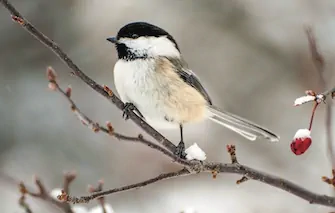
Tiny Birds, Big Survival Skills
Chickadees and sparrows are masters of endurance. One key survival strategy is food caching. Chickadees in particular, store seeds, berries, and even small insects in hidden nooks around their territory during the Fall. Their remarkable memory allows them to retrieve their hidden stockpiles even under layers of snow, ensuring a constant food supply when insects are scarce. Sparrows, while less prolific in hoarding, are agile foragers, feeding on seeds and leftover grains that persist through winter.
Both species also rely on their high metabolism to generate heat. Chickadees can shiver almost constantly, turning muscle activity into warmth. When temperatures plummet, they sometimes enter a state called torpor whereby they briefly lower their body temperature to conserve energy. By slowing their metabolism overnight, they survive periods of extreme cold without exhausting their fat reserves.
Another critical strategy is insulation. Birds fluff their feathers to trap air, creating an insulating layer against the cold. They also select sheltered roosting spots, such as dense shrubs, coniferous trees, or abandoned woodpecker holes. Chickadees are social sleepers—they huddle in groups, sharing body heat and dramatically improving their chances of surviving frigid nights. Sparrows, though less communal at night, seek dense brush and hedgerows to shield themselves from wind and snow.
Helping Our Feathered Friends
Winter survival for sparrows and chickadees is a delicate balance, and humans can help make a real difference. Providing a steady source of high-energy food is crucial. Black oil sunflower seeds, suet, peanuts, and cracked corn are favourites. Setting up feeders near dense shrubs or evergreens gives birds a safe place to feed and quickly retreat to shelter.
Planting native shrubs and evergreens also supports winter survival. Species like juniper, saskatoon, snowberry, and spruce provide cover from wind and predators, as well as natural food sources. Leaving some seed heads on perennial plants like coneflowers and asters can provide additional nutrition when snow covers the ground. Be certain to position bird feeders away from deer access and take them down when bears emerge in Spring.
Water is another vital resource. Frozen landscapes benefit from the addition of a small heated bird bath or regular offerings of a shallow dish of fresh water. These gestures ensure that neighboring birds stay hydrated without expending excessive energy to find it.
By providing food, shelter and water, rural Albertans can help these small but resilient birds to not just survive, but to thrive through the harshest winter months. Observing sparrows and chickadees flitting about your yard during a cold snap is a reminder that, with a little help, we can continue to observe and enjoy nature’s tiny warriors through every season of the year.
Visit www.braggcreekwild.ca














 Free Classifieds