








Trick or Treat, Glass in Hand: A Wine Pairing Guide for Halloween Candy
I’ll admit it: this is the column I’ve wanted to write all year! Every fall, wine writers dutifully pair Cabernet with steak and Chardonnay with turkey, and every fall I’m secretly more interested in what goes with the mini chocolate bars I’m “just organizing” out of the Halloween bowl. So this month, we’re doing something different; treating your kid’s candy haul (or your own, no judgment) like the serious tasting menu it actually is.
The Chocolate Aisle
Chocolate and wine is a genuinely tricky pairing, and often fails because both elements contain bitter tannins and contrasting acids that clash on the palate rather than complement each other. The fix is simple: your wine needs to be at least as sweet as the candy, or it will lose every time. Your wine also needs to low to now tannin. For milk chocolate bars, think the classic caramel- and-nougat combos and reach for Tawny Port or a late-harvest Vidal. Both have caramel and dried-fruit notes that mirror what’s already happening in the candy, so instead of clashing, they extend the flavour. For dark chocolate (the “adult” candy bowl, let’s be honest), a rare Banyuls from old Grenache vines or (more easily available) Ruby Port is the classic move, the dark-berry richness stands up to cocoa without getting steamrolled by it. If you’re the type to hoard the peanut- butter cups, Sherry is the pairing nobody tells you about. The nutty, slightly oxidized character of the Sherry mirrors the roasted peanut flavour almost eerily well, and the sweetness keeps pace with the sugar. Look for Oloroso or Amontillado.
Gummy and Sour Candy
This is the category most people get wrong because gummies and sour candy actively fight most wine. High-acid candy needs a wine with equal or higher acidity, or the wine will taste flat and dull by comparison. A sparkling Moscato d’Asti is the move here because it’s sweet enough to match fruit-flavoured gummies, and the bubbles reset your palate between handfuls the way soda water does. For sour candy specifically (the citric-acid bombs that make your face scrunch), a crisp Riesling with real residual sugar, not bone dry, can actually tame the sourness rather than compete with it.
My Fave: Salty Snacks
My favourite house on the block had mini bags of Cheezies and Ruffles and it was everyone’s go to. You’re lucky to pass the rare house that includes chips, pretzels, or popcorn, and salt is one of the easiest things in the world to pair with wine. Salt softens tannin and highlights fruit, which is why my pick of sparkling wine is the unsung hero of the salty-snack world: a simple Cava or Crémant with a bag of salt-and-vinegar chips is a genuinely great combination. If you want something less bubbly, an unoaked, high-acid white like Sauvignon Blanc from Sancerre does the same job with pretzels or popcorn.
Candy Corn, For the Brave
Yes, someone always asks. Candy corn is essentially pure sugar with a waxy vanilla note, and the only wine with a fighting chance is something equally saccharine. An ice wine or a Sauternes poured in a small glass, because a little goes a long way on both sides of that pairing. Then throw out your candy corn and pick a better candy.
The Host’s Move
If you’re handing out candy and pouring for the adults on your porch, don’t overthink it: a bottle of Lambrusco, slightly sweet and lightly sparkling, is the one wine that works across almost the entire candy bowl. It’s forgiving, festive, and frankly more fun for a night that’s supposed to be a little silly.
However you spend the 31st, don’t be afraid to treat the candy bowl like a flight. You’ll never look at a fun-size Snickers the same way again.
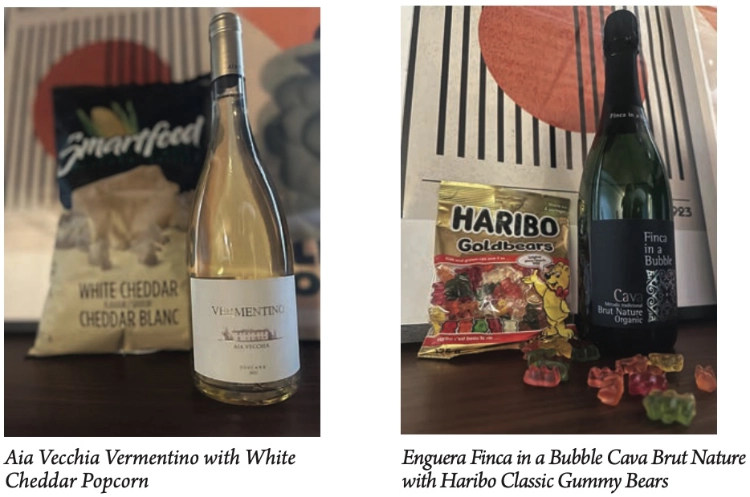
Photo Credit: Stephanie Gilker
Cheers!
Stephanie Gilker is the founder of Saint Wine Society, curating polished wine tasting experiences and Champagne service across Alberta. She holds WSET Level 3, French Wine Scholar, and Master of Champagne certificates, bringing expertise, creativity, and elegance to every glass.














 Free Classifieds