









The last article of 2025.
Thanks to those who have followed me to the end. And speaking of the end, in this article I’ll turn my attention to businesses that use a sales strategy that attempts to turn last-minute profits. That strategy is a Boxing Day sale. What is a Boxing Day sale?
When I Google it, I get the following: Boxing Day comes from two traditions: the giving of “Christmas boxes” containing gifts and money to servants and tradespeople, and the collection of money in church donation boxes to be distributed to the poor on the Feast of St. Stephen on December 26th. Over the years it’s turned into something a bit more like Black Friday, a major retail promotion held the day after the US Thanksgiving and is financially focused, referring to retailers moving from “in the red” to “in the black”. Either of these days to shoppers means one thing: Sales.
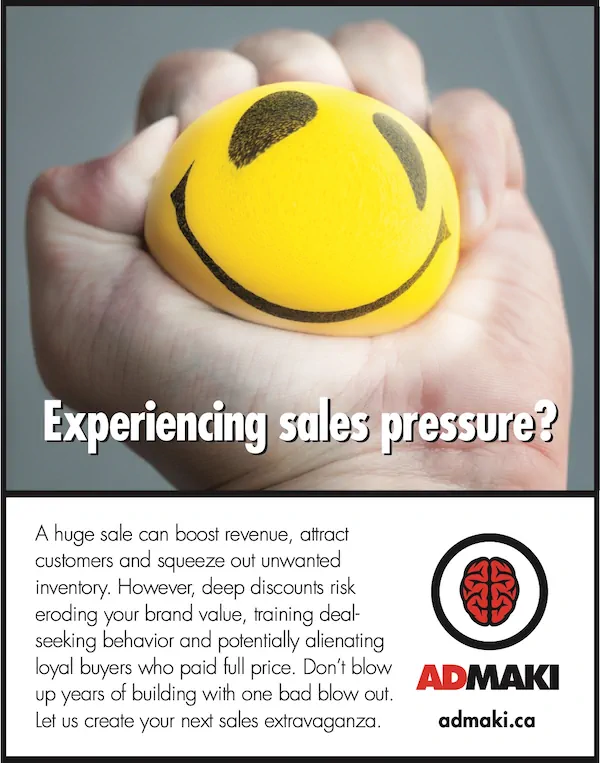
When you engage your business in a Boxing Day event, you’re broadcasting not only your brand’s personality with a disco ball but inviting your bottom line to a game of roulette. The sign promises urgency and generous savings. Things that can either make your brand look like it’s over caffeinated or sales are sluggish and in need of another cup of joe.
Done well, it can help you boost foot traffic, attract new customers, sell impulse purchases and help clear out inventory that’s been rotting since January. Done poorly, it trains shoppers to treat full price like a “suggestion” you can outwait. It underminds your product’s value and exhausts your employees. Either way, the sign is a signal. Are you about discounts and joy, or about panic and markdown pin- the-tail-on-the-donkey? Your cash register and reputation will answer honestly.
Consider a candy shop that does it right: The advertisement doesn’t scream. It invites. Your social media post announces a “Sweetheart of a Boxing Day Sale” with a “Buy 2, Get 1” on remaining holiday treats. Inside, staff bundle high margin seasonal crowd-pleasers such as peppermint bark with candy canes. Shoppers feel welcomed, not hustled, and leave with treats they didn’t know they needed ten minutes earlier. A bonus, since it’s after Christmas. The brand comes off neighbourly, generous and fun. You just had a huge turnover of seasonal stock and customers leave with a grin sure to return. Plus your bottom-line nods in happiness.
Now, what if it’s not the right strategy for a business? Consider the tire shop next door. A digital ad flies across your screen as you check out the day’s weather online. “BOXING DAY 70% OFF TIRES!!!!” in letters large enough to reach the sky. Tires aren’t impulse items. They are size specific, safety critical, labor heavy, and thin margined. The headline summons shopping snipers expecting the exact fit in stock and installation. Inventory lags, other shoppers jostle and fight, wait times stretch, and staff spend hours run off their feet trying to fend off blood thirsty deal hunters. Disappointment morphs into walk-outs, price expectations crater, and whatever remains of your brand shopping experience evaporates in the sweaty scuffle. Not exactly inspiring confidence at highway speeds and the shopper may go elsewhere calmer next time.
The takeaway. When it comes to your brand, use sale strategies sparingly for the right product and right audience.
See ya next year, mark.













 Free Classifieds